Chapter 3
This chapter examines awareness and attitudes towards existing and emerging technologies, applications and processes of science. This includes general attitudes toward technology and its regulation, as well as attitudes to specific science and technology topics. The latter includes areas that have long been covered in this survey series, such as the use of animals in research, as well as fast-evolving and emerging technologies like artificial intelligence (AI).
Chapter 3
This chapter examines awareness and attitudes towards existing and emerging technologies, applications and processes of science. This includes general attitudes toward technology and its regulation, as well as attitudes to specific science and technology topics. The latter includes areas that have long been covered in this survey series, such as the use of animals in research, as well as fast-evolving and emerging technologies like artificial intelligence (AI).
The overall story
Two-thirds of the public agreed that technology enhances people’s lives. However, since 2019, concerns have grown about the extent to which scientists appropriately consider the risks associated with new technologies. AI joins the group of technologies, applications and processes which polarised public opinion, alongside traditional areas of concern such as genetically modified (GM) crops and the use of animals in medical research.
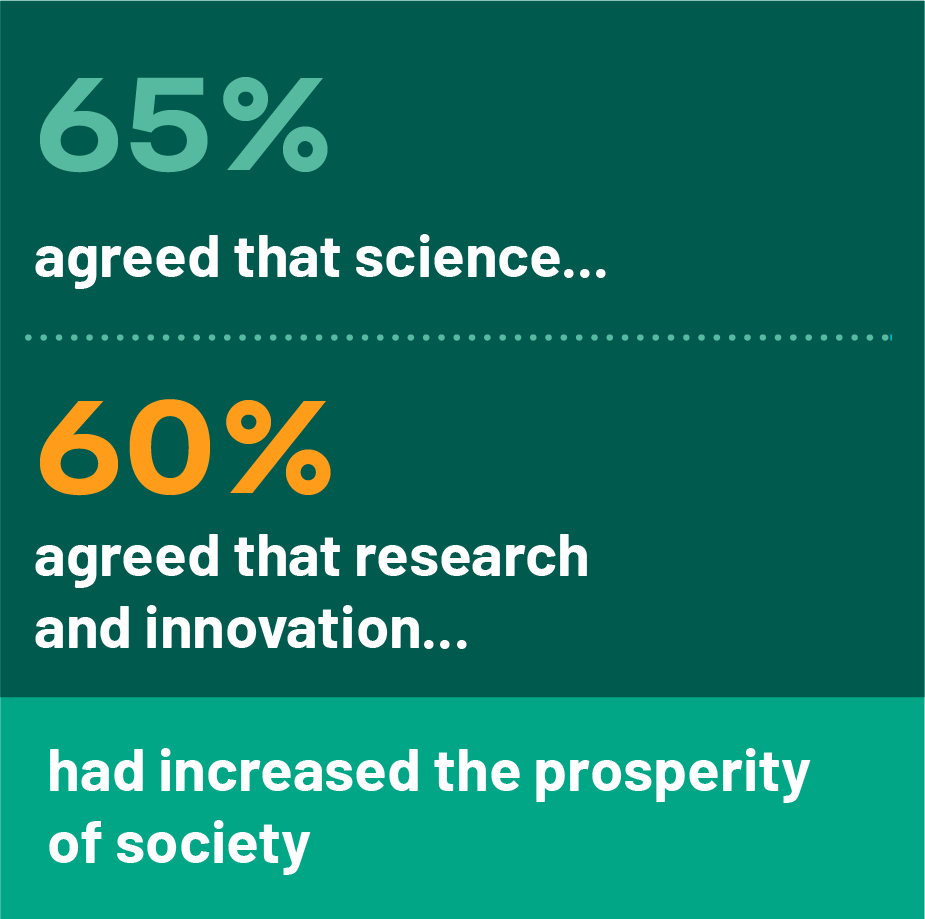
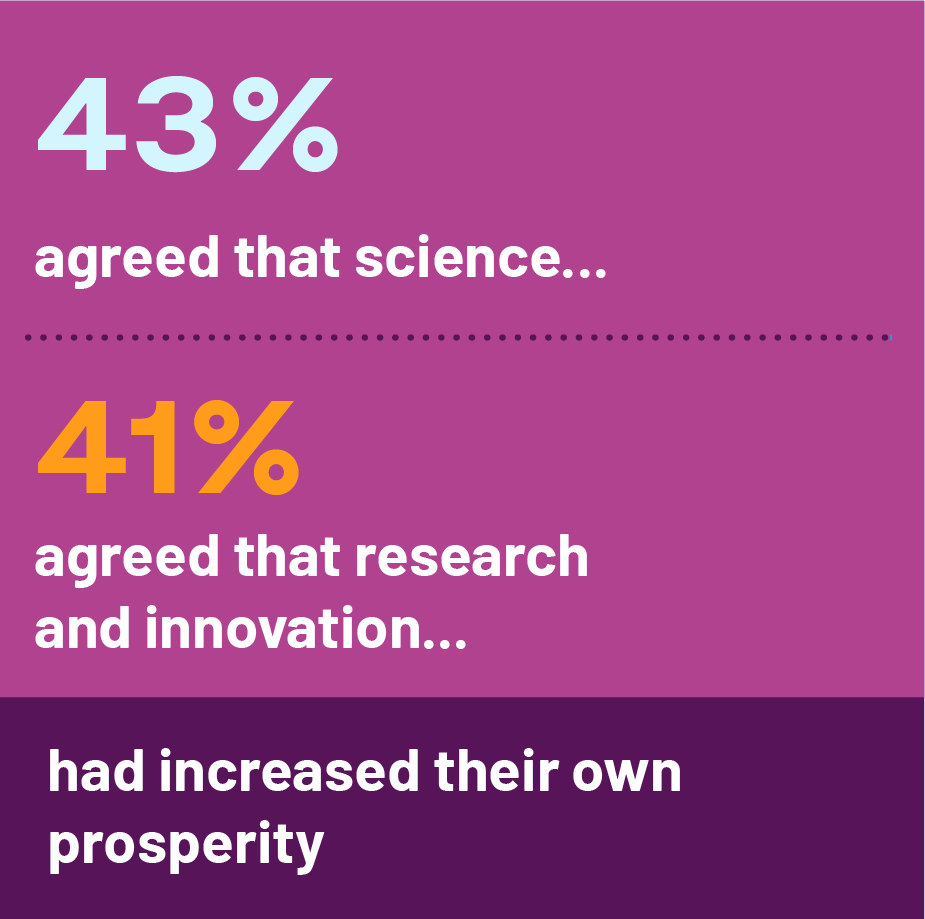
There was a disconnect between scientific progress, and personal prosperity. While over three-fifths agreed science made a direct contribution to the UK’s economic growth and had increased the prosperity of society as a whole, only two-fifths felt it had increased their personal prosperity.
In addition, people were unclear about how science was contributing to big societal challenges. People felt more informed about science’s contributions to improving the NHS, and to making the UK a world leader in clean energy, but less so about its impact on childcare and education, economic growth, and crime reduction.
However, in each of these five areas, only a minority of the public felt informed. Despite this, there was strong public backing for the government to invest in science, research, and innovation, and for science to contribute to each of these areas.
Headlines
3.1 The development of science and technology

Dealing with technological change
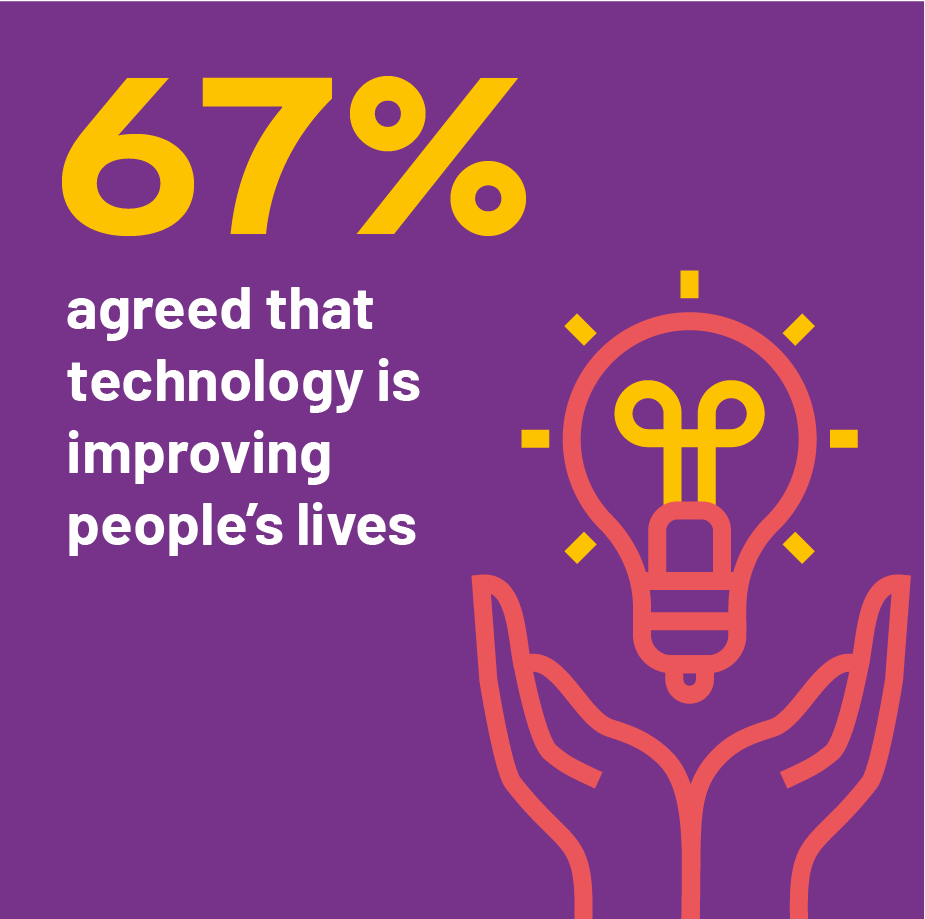
PAS showcases a UK public that largely embraces new technology. In a new question, two-thirds (67%) agreed that, on the whole, new technology is improving our lives. Just one in nine (11%) disagreed.
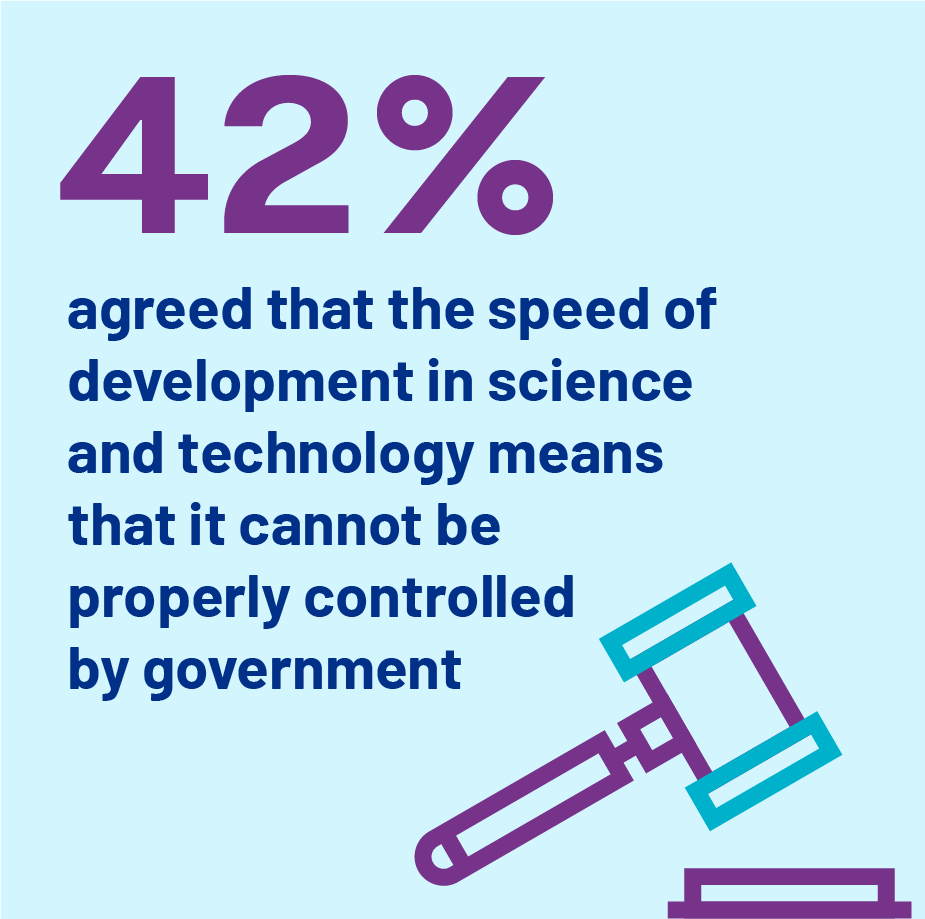
Nonetheless, a sizable minority of the public had concerns about the risks of new technologies in general, and the government’s ability to manage the risks. While just over half (55%) were confident that scientists in the UK have thoroughly considered the risks of new technologies before they are used three in ten (31%) were not confident. In addition, nearly twice as many people agreed than disagreed that the speed of development in science and technology means that they cannot be properly controlled by government (42% vs. 22%).
These concerns are not wholly new. Roughly the same proportion have voiced concerns about the government’s ability to control new developments in science and technology in every survey since 2000 (when this was first asked). Concern has not risen, despite significant technological developments affecting people’s daily lives (for example, in AI) in recent years. However, confidence in scientists thoroughly considering the risks of new technologies has decreased since 2019 (from 69% to 55% confident that scientists have done so).
A sizable minority of the public had concerns about the risks of new technologies in general, and the government’s ability to manage the risks.
Demographic differences were similar to those seen in other areas of the survey. Men, graduates and people with high science capital (those more connected to science in their daily lives), were more positive about technological change. Interestingly, bucking this trend, individuals with high science capital were more likely to express concern about the government’s ability to manage the risks of new science and technology – half (49%) agreed this cannot be properly controlled by government, compared with 35% of those with low science capital.
Perceptions of specific technologies, applications and processes
Chapter 1 covered the finding that 43% of people felt informed about science overall. The PAS studies have always included additional questions asking how informed people felt about specific topic areas, shown in the chart below.
There were a range of highly salient topic areas in this list, such as vaccination, mobile technologies and AI. By contrast, at the bottom of this list were technologies, applications and processes that very few felt informed on, such as genome editing, nanotechnology, quantum technologies and synthetic biology.
Due to changes in question wording, not all these topics can be tracked over time, including AI. However, one area that has shifted is vaccinations. Despite the highly publicised coverage of the COVID-19 vaccines during the pandemic, the proportion of people feeling informed about vaccination has consistently fallen (from 77% in 2014, to 71% in 2019, and 66% in 2025).
Men, younger people aged 16 to 24, and graduates were typically more likely to feel informed about each of the technologies listed. However, there were exceptions, which potentially reflected levels of exposure. Women were more likely than men to feel informed about vaccination programmes and the use of animals in research. Older people aged 65 or over were also more likely to feel informed about the vaccination of people than young people.
The proportion of people feeling informed about vaccination has consistently fallen

AI was a particular topic area where information levels varied considerably by age group, as the following chart shows. The majority of women also felt uninformed about AI (55% not very or not at all informed, versus 40% of men).
The survey also covers the perceived risks versus benefits of each of these technologies, applications or processes to understand where public concerns may lie. It is important to note that these questions were only asked of people who felt informed, at least to some extent, about each topic (excluding those saying “not at all informed”).
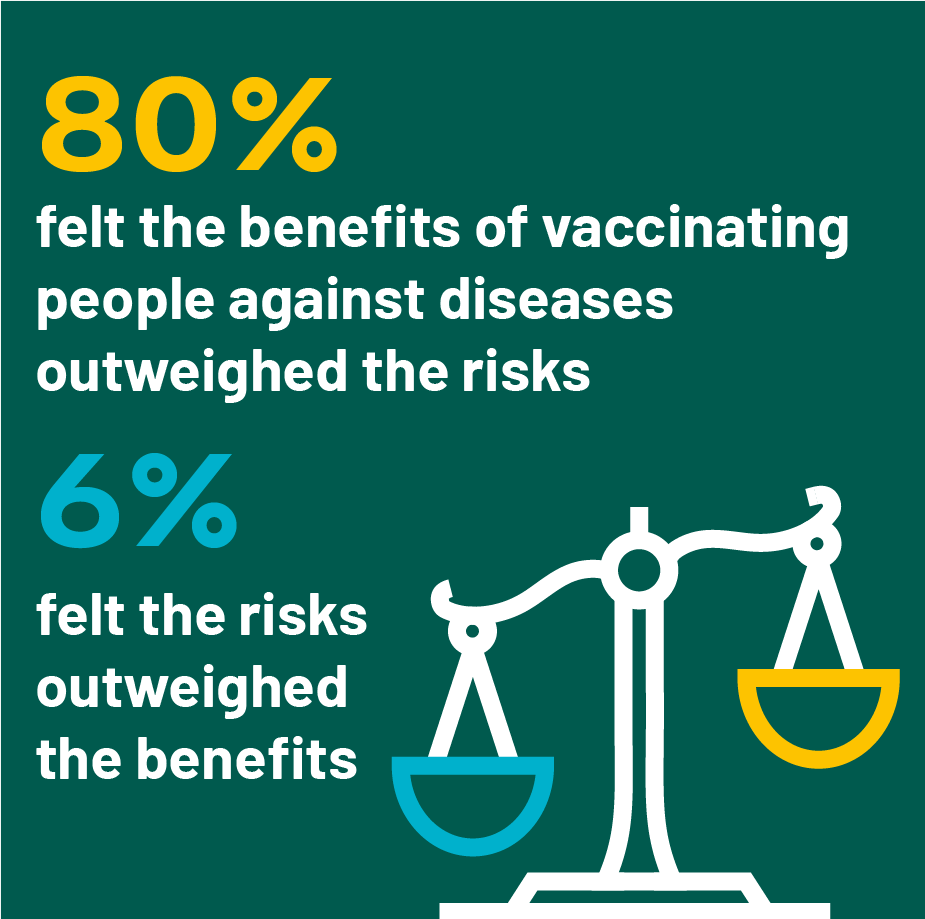
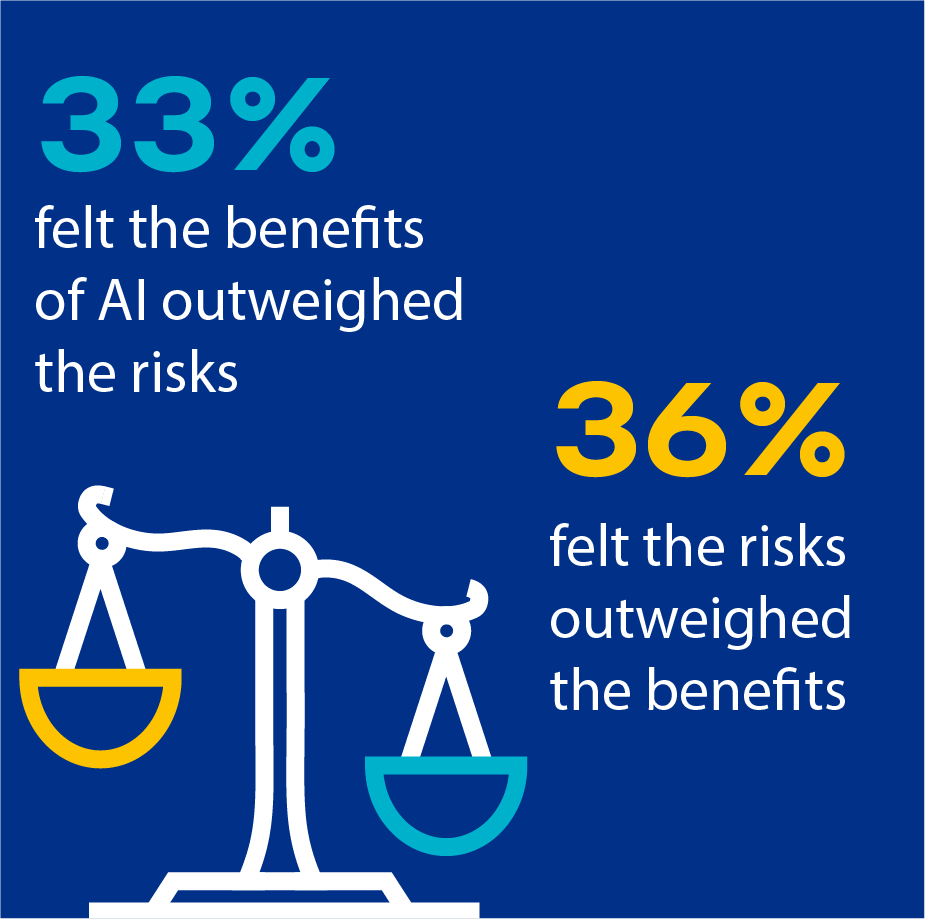
The chart below highlights the overwhelmingly positive views towards vaccination, with a small proportion who were sceptical. At the same time, several topics were considerably more polarising, including animal research, GM crops, AI and driverless vehicles.
Making people feel more informed about AI or other controversial technologies may not, on its own, build public trust or allay concerns.
As well as feeling more informed on each of these topics, men, graduates, and people with high science capital were, in general, more likely than average to emphasise benefits, rather than risks, from the various technologies, applications and processes asked about.
Looking across the questions on awareness and attitudes, on certain issues there is a link between awareness and favourability.
For instance, the UK public felt relatively well informed about vaccinations and mobile phone technologies, which they also viewed positively. AI bucks this trend, being a divisive topic despite people feeling relatively well informed about it. This suggests that there is not simply a fear of the unknown underpinning people’s concerns. Moreover, making people feel more informed about AI or other controversial technologies may not, on its own, build public trust or allay concerns.
3.2 Science’s contribution to society and the economy

Growing the economy
A clear majority of people agreed that science made a direct contribution to economic growth (64%). Just 5% disagreed with this sentiment, and 29% neither agreed nor disagreed. For the first time, a similar question was also asked with regards to research and innovation. A higher proportion (69%) agreed that research and innovation contributed directly to economic growth. The higher agreement may reflect the greater association with technology and tools attached to “research and innovation” versus “science”, covered previously in Chapter 1.
However, belief in the economic value of has dropped since 2019 (when 75% agreed), having been relatively stable since 2011. This drop was accompanied by more people neither agreeing nor disagreeing.
%
of people agreed that science made a direct contribution to economic growth.
Dealing with major societal challenges and issues
The less positive attitudes around contribution to economic growth may be because people feel uninformed about how it contributes. A new series of questions explored how informed people felt about science’s contributions to big societal issues – all shown in the next chart. The categories were chosen based on the government’s long-term missions (although we did not explicitly mention this in the survey). These questions were framed broadly, to cover “science, research and innovation” together.
The notion that science has a part to play in broader aspects of society and public policy might have been too abstract for most people. For each of the five areas covered, most of the public did not feel informed. Furthermore, there was a clear split – far fewer people felt informed about how science contributed to economic growth, improvements to childcare and education, and crime reduction, than to cleaner energy or a better NHS.
In line with the patterns seen throughout this report, men, those educated to degree level or higher, and people with high science capital (those with more connections to science or scientists in their everyday lives) were more likely to feel informed about most of these topics. However, there were exceptions, possibly reflecting relative exposure to each of these areas. For example, women were more likely than men to feel informed about the contribution science had on improving childcare and education (34% versus 27%).
The survey also asked the public how important it was for the government to invest in science, research and innovation to improve each of these five areas. In each area, there was a near-universal public desire for government investment, which cut across all demographic groups.
In each area, there was a near-universal public desire for government investment, which cut across all demographic groups.
Drawing on other findings from elsewhere in the PAS data, we see that most people (73%) acknowledged the effect human activity can have on the climate. Those who shared this sentiment were, perhaps unsurprisingly, more likely to think it was important for the government to invest in science, research, and innovation that would help make Britain a world leader in clean energy.
Personal versus societal prosperity
New questions for 2025 suggest that people were more likely to see science as benefitting society at large, rather than their own personal prosperity. Around two-thirds (65%) felt that science had increased the prosperity of society. In comparison, only two in five (43%) agreed that science had increased their own personal prosperity. Parallel questions were also asked about “research and innovation” as opposed to “science”, and these garnered very similar responses.
Around half (54%) agreed that science had improved the quality of public services in the UK – also a new question. One in nine (11%) disagreed, while a third (33%) neither agreed nor disagreed – with the neutral response being strongest among those who felt less informed about science in general. Similar opinions were noted for research and innovation, as well as science.
Graduates were more likely than average to agree that science had increased their personal prosperity. However, there were splits within this group – 75% of science and engineering graduates agreed, compared with 53% of graduates from the social sciences and 48% from arts and humanities subjects.
People living in London were also more likely than average to agree that science had increased their personal prosperity (52%, versus 43% overall). Perhaps less surprisingly, this attitude was also linked to financial hardship – those who answered in another survey question that they were finding it difficult to live on their present income were less likely than others to agree that science had increased their personal prosperity (32% agreed, versus 43% overall).
People were more likely to see science as benefitting society at large, rather than their own personal prosperity.