
Chapter 5
of science
This chapter delves into how and where people consume information and news about science. This includes a small number of questions repeated from previous editions of PAS, about the volume of information, trust in information, conflicting information and the media’s treatment of science. It also includes a large set of new questions for 2025, covering how people were both actively seeking out information about science, and passively coming across it. These questions provide new insights into the information sources that people use and trust.
Chapter 5
Consumption
of science
This chapter delves into how and where people consume information and news about science. This includes a small number of questions repeated from previous editions of PAS, about the volume of information, trust in information, conflicting information and the media’s treatment of science. It also includes a large set of new questions for 2025, covering how people were both actively seeking out information about science, and passively coming across it. These questions provide new insights into the information sources that people use and trust.
The overall story
In an evolving digital landscape, new media, encompassing social media platforms and YouTube, has become one of the main ways to access information on science. Moreover, among 16 to 24 year-olds, new media surpassed traditional media – TV, radio, and newspapers or magazines – as the most frequent source of information about science.
While the overwhelming majority of those who sought information on science said it was easy to find and understand, the proliferation of information sources has not led to an increase in trust. There was an increasing desire to see or hear more about science compared to previous years. However, people were also more uncertain than before whether the information they heard about science was true.
Some results reflected the challenges of media polarisation, misinformation and disinformation. There were fewer concerns around media sensationalism, or conflicting information on science, than in any previous PAS survey – which may indicate more people self-curating their news and information sources, or having them pre-filtered by algorithms. People were equally likely to say they trusted information they had sought, regardless of whether it was on traditional media, new media, or through friends, family and colleagues (including WhatsApp). Moreover, trust was often not based on people checking findings for themselves. Instead, people said it was more commonly based in their confidence in processes, sources and institutions.
Headlines

5.1 Do people hear too much or too little?

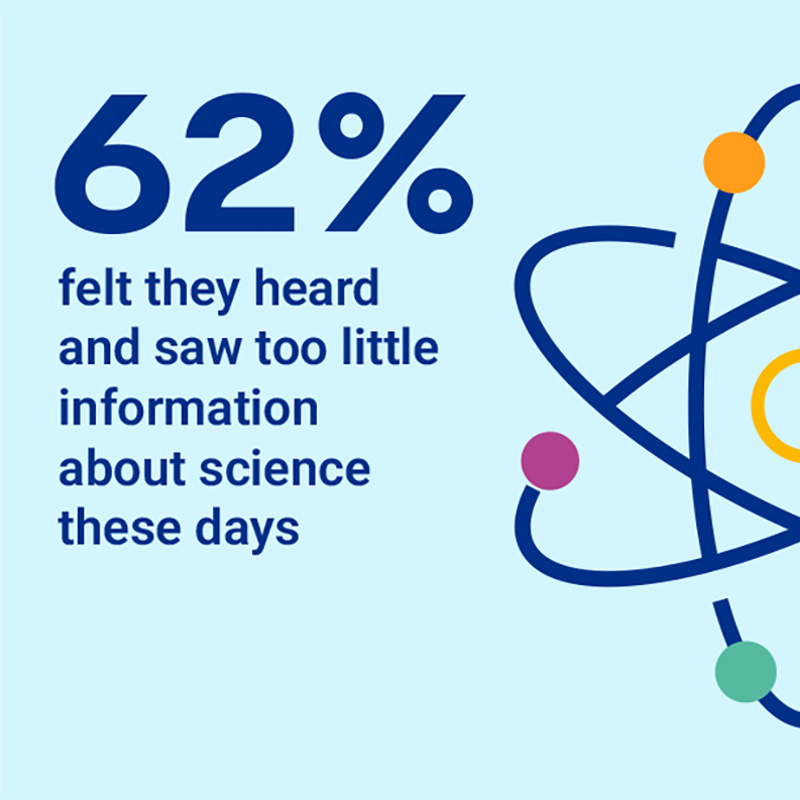
As context for the rest of this chapter, this section covers a longstanding question from PAS on the volume of information about science. There was a clear desire for more information about science. Three-fifths (62%) said they saw or heard too little information, while three in ten (31%) felt that they encountered the right amount, and just 5% felt they saw or heard too much.
As the chart below shows, this desire for more information has reached its highest level in the last 25 years. As Chapter 4 shows, this does not necessarily mean that people want to hear more from regulators, or from scientists about ethics, but it reflects a more general interest. It also aligns with fewer people feeling informed about science than in 2019 (covered in Chapter 1).
Desire for more information has reached its highest level in the last 25 years.
Those that did not feel informed about science (covered in Chapter 1) were more likely to agree they saw and heard too little about it. In addition, the 25 to 34 age group was more likely than average to report seeing and hearing too little information.
5.2 The quality and reliability of information

Two regular questions in PAS have looked at the perceived quality and reliability of information on science available to the public. The latest data suggests that quality and reliability remain concerns, but these concerns have diminished over time. As the following chart shows, around half (47%) agreed that there is so much conflicting information about science, it is difficult to know what to believe.
And just over half (55%) believed the media sensationalises science. Both statistics have dropped from their peaks in earlier years.
Looking at the drop in perceived media sensationalism, one explanation may be the move away from science being accessed through traditional “media” (i.e., TV, radio, newspapers and magazines), and more towards new media. This is covered in later sections of this chapter. Additionally, one explanation for the drop in concern about conflicting information in science could be increasing media polarisation and the rise of filter bubbles. That is, people increasingly self-curating their sources of news and information, or having information filtered for them through search algorithms. However, further research would be needed to more directly make these links.
Women were more likely than men to agree that there was conflicting information, but less likely to agree that the media sensationalises science. Young people aged 16 to 24 were also less likely than average to agree that the media sensationalises science.
5.3 How and where do people find information on science?

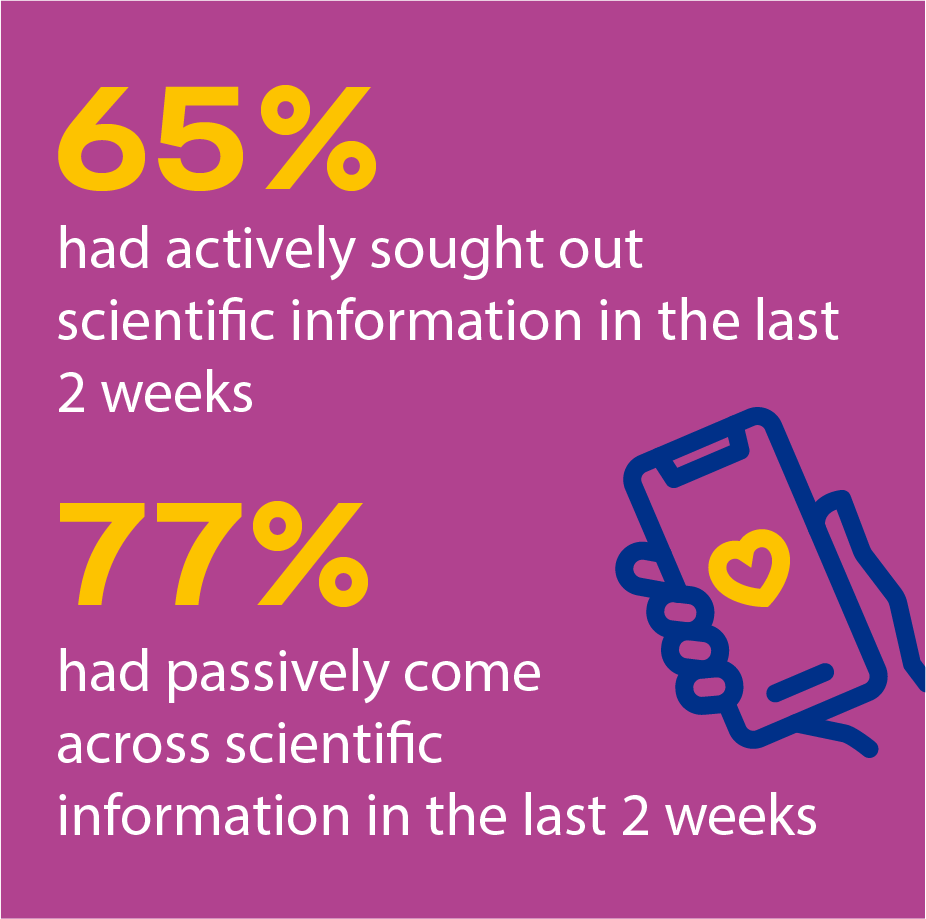
The remainder of this chapter largely focuses on new questions for 2025. These delve more deeply into how people access information on science. We asked where people had either actively sought out such information, or passively come across it, in the two weeks before completing the survey. Science-related information was not defined but left up to those taking part to self-report.
The chart below provides several insights on this:
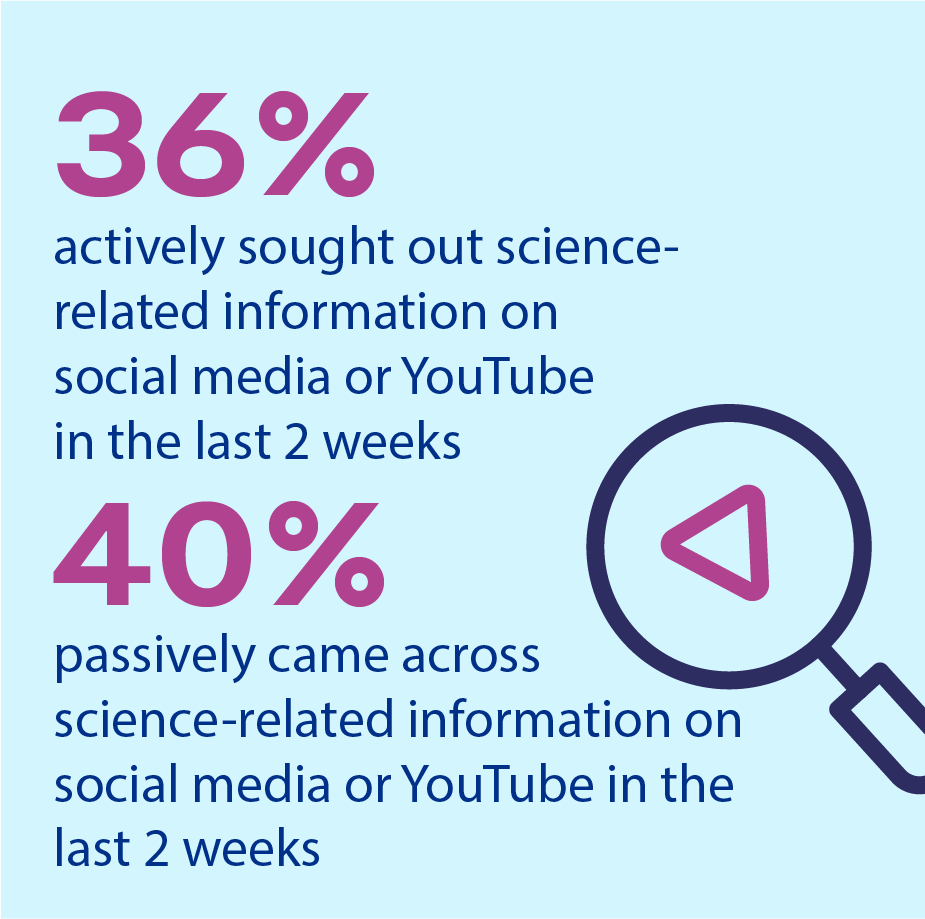
- When grouped together, traditional media sources such as TV, radio, newspapers and magazines, remained the most common platforms for passively seeking out information about science. However, new media (including social media platforms like Instagram, Facebook, TikTok and X – formerly known as Twitter – as well as YouTube) was on a par with traditional media as a place to actively seek information on science.
- Social media (excluding YouTube) was more commonly used for passive engagement rather than active information seeking.
- People were more likely to actively seek out information through certain sources, than to passively come across it. These included non-news TV programmes (e.g., documentaries) and YouTube.
The overall statistics in the chart above mask important differences by age. A majority of young people aged 16 to 24 had come across science-related information on new media sources in the previous two weeks, either passively (59%) or by actively seeking it out (55%). These sources far surpassed traditional media for this age group.
5.4 Social media platforms

Access to science-related information on social media was dominated by four platforms – Instagram, Facebook, TikTok and X (formerly Twitter) – as the following chart shows. Other specific platforms (e.g., Snapchat, WeChat, Bluesky, LinkedIn and Telegram) were included in this question but were much less commonly mentioned.
TikTok and Instagram rated considerably higher among young people aged 16 to 24. For example, for this age group, 31% had passively come across science-related information on TikTok, and 27% had come across such information on Instagram.
5.5 Percieved value and use of the information found
People were more likely to share or discuss science-related information if they had been actively seeking it out rather than if they passively came across it (68% versus 54%). Similarly, they were more likely to have sought out further information on the same topic if they had been actively looking, compared to passively encountering it (54% versus 34%). These findings also highlight that it was more common for people to share science-related information than to look for more information themselves.
Men were more likely than women to seek out further science-related information on the same topic. By contrast, women were more likely than men to share or discuss the science-related information they had seen. These differences were irrespective of whether they had actively sought out this information or passively come across it.
Traditional media versus new media
Further insights come from comparing traditional media (TV, radio, and newspapers or magazines) to new media (social media platforms and YouTube). The chart below shows the perceived value and use of information actively sought in the bars on the left, and information passively received in the bars on the right – both broken down between traditional and new media.
As the chart indicates, science-related information sought out via new media rather than traditional media was considered more interesting, easier to understand and easier to find. Furthermore, science-related information on new media was more likely to be followed up by people looking for more information.
Interestingly, science-related information passively encountered via traditional media (which could still be online, through streaming services or websites), was more likely to be shared or discussed than the information encountered on new media.
Science-related information sought out via new media was regarded as more interesting, easier to understand and easier to find.

5.6 Trust in information

Two in five people (40%) agreed that the information they heard about science was “generally true”, while very few (9%) outright disagreed. This leaves a large group who were uncertain, neither agreeing nor disagreeing (48%).
This uncertainty around whether to trust science-related information has increased over time (since the question was first asked in 2011).
Men were more likely to agree that the information they see or hear is generally true (46%, versus 34% of women). Graduates were also more likely to agree than average (49%, versus 40% overall).
Why do people trust or distrust information about science generally?
People who thought that the science-related information they heard was generally true or untrue were asked why they thought this. These follow-up questions were unprompted, so the responses reported here have been grouped together to better show the insights. Firstly, the top reasons (all responses above 10%) for trusting information were:
27%
Having trust in the scientific process
22%
Having trust in specific sources
16%
A reputable media
11%
People doing their own verification, research and fact-checking of what they heard
The above list already shows that most people’s rationale for trusting was not based on validating the information themselves, but was often based on having confidence in processes, sources and institutions. Other responses were less frequent.
The top reasons (all responses above 10%) for distrusting science-related information in general were:
24%
Information overall often being biased, misleading, conflicting or fake
19%
Information in the media being biased, misleading, conflicting or fake
20%
Information on social media specifically often being biased, misleading, conflicting or fake
12%
Science information being influenced by money, politics or other agendas
The responses suggest a range of concerns around information sources and wider agendas. They also suggest particular concerns around science-related information on social media, which – as noted earlier in this chapter – has become a prolific source for such information.
While methodology changes limit direct comparisons to previous editions of PAS, the shifts in the top responses suggest new factors are affecting trust. In PAS 2025, biased or misleading information was a greater concern than a lack of evidence or information not being checked (both the top responses in 2014 and 2019).
Trust based on where the information came from
This section focuses on individuals who either actively sought or passively encountered science-related information two weeks before the survey.
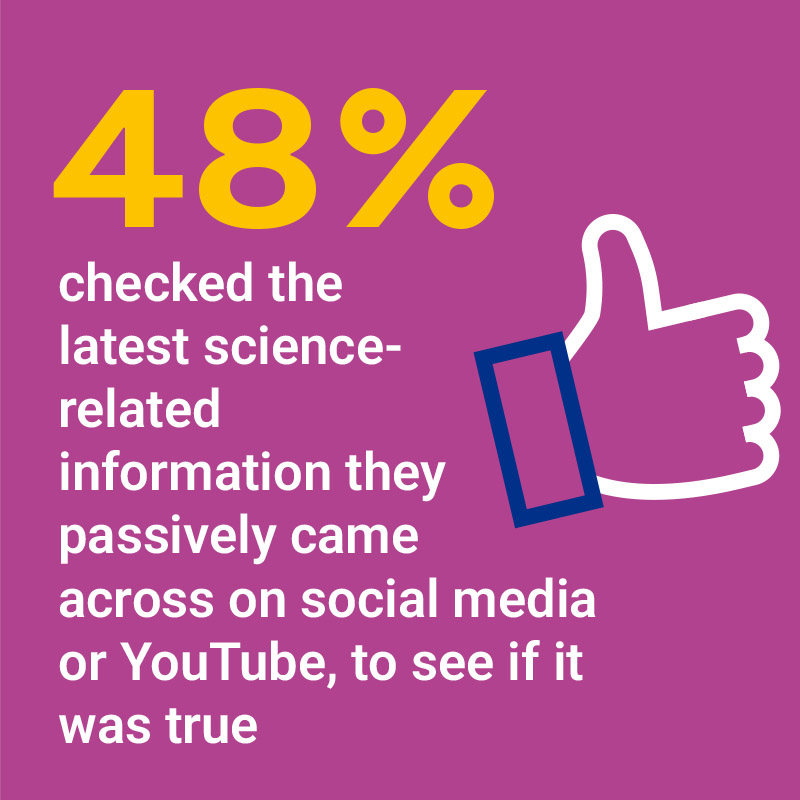
Information was more trusted when actively sought (87%) rather than passively encountered (81%). People were also more likely to make efforts to verify information they sought (45%) compared to passively encountered content (31%). In both cases when seeking or receiving information, trust levels were higher than verification levels, suggesting that trust was not necessarily based on people checking the information for themselves.
The following chart shows the levels of trust and verification of information actively sought in the bars on the left, and of information passively encountered in the bars on the right – both broken down by the information channel. It illustrates that people seeking out information tended to trust it regardless of where it came from, be it traditional media, new media or via conversations with friends, family or colleagues (including on WhatsApp).
People seeking out information tended to trust it regardless of where it came from, be it traditional media, new media or via conversations with friends, family or colleagues.
People were more likely to check information from non-traditional media sources than from traditional ones, suggesting greater scepticism of new media. However, many were not doing any form of checking, before deciding to trust what they saw (e.g., only 36% verified information they had passively encountered via word-of-mouth or WhatsApp).